Portable force-sensing hardware for human performance.
The Future of Human Performance
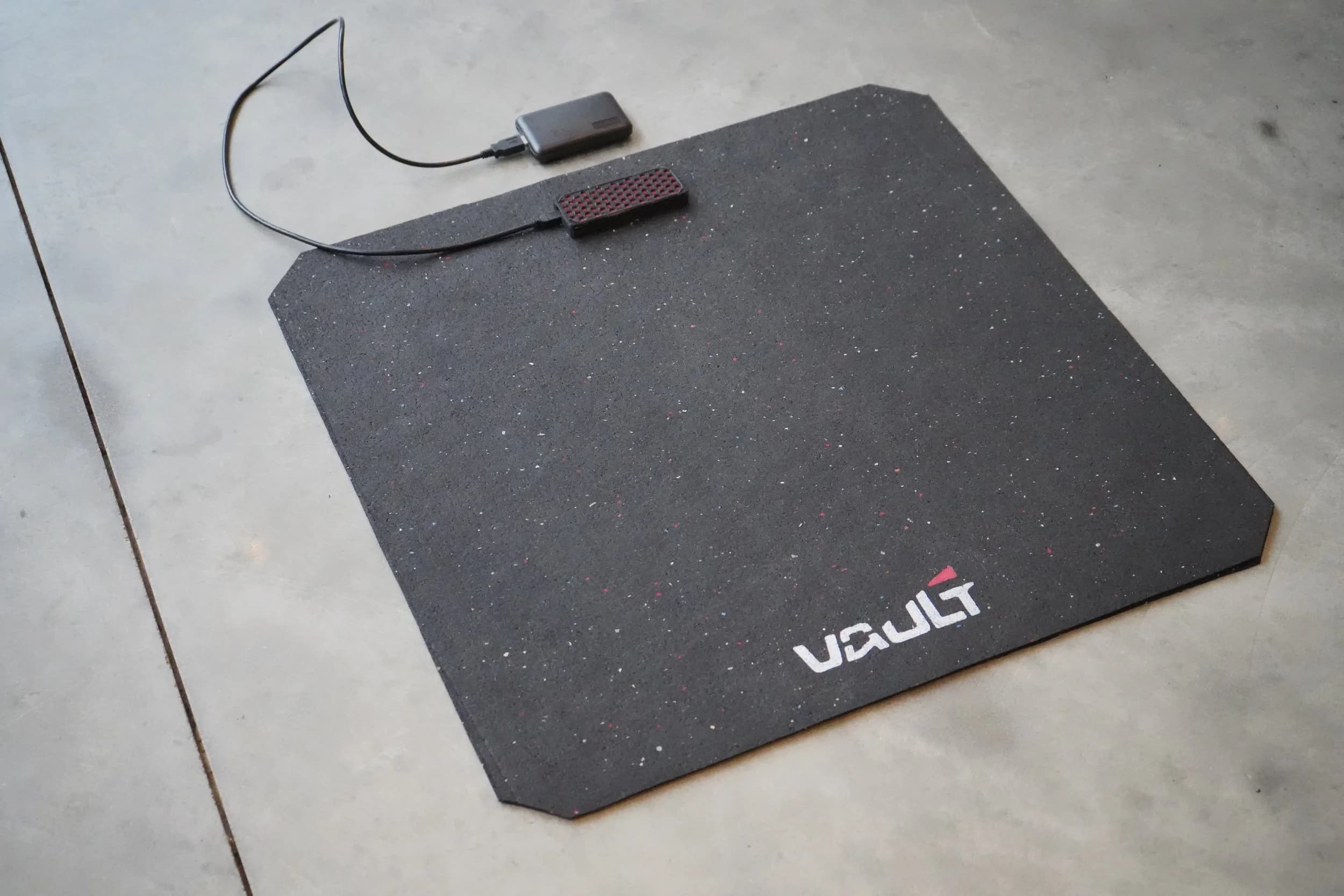
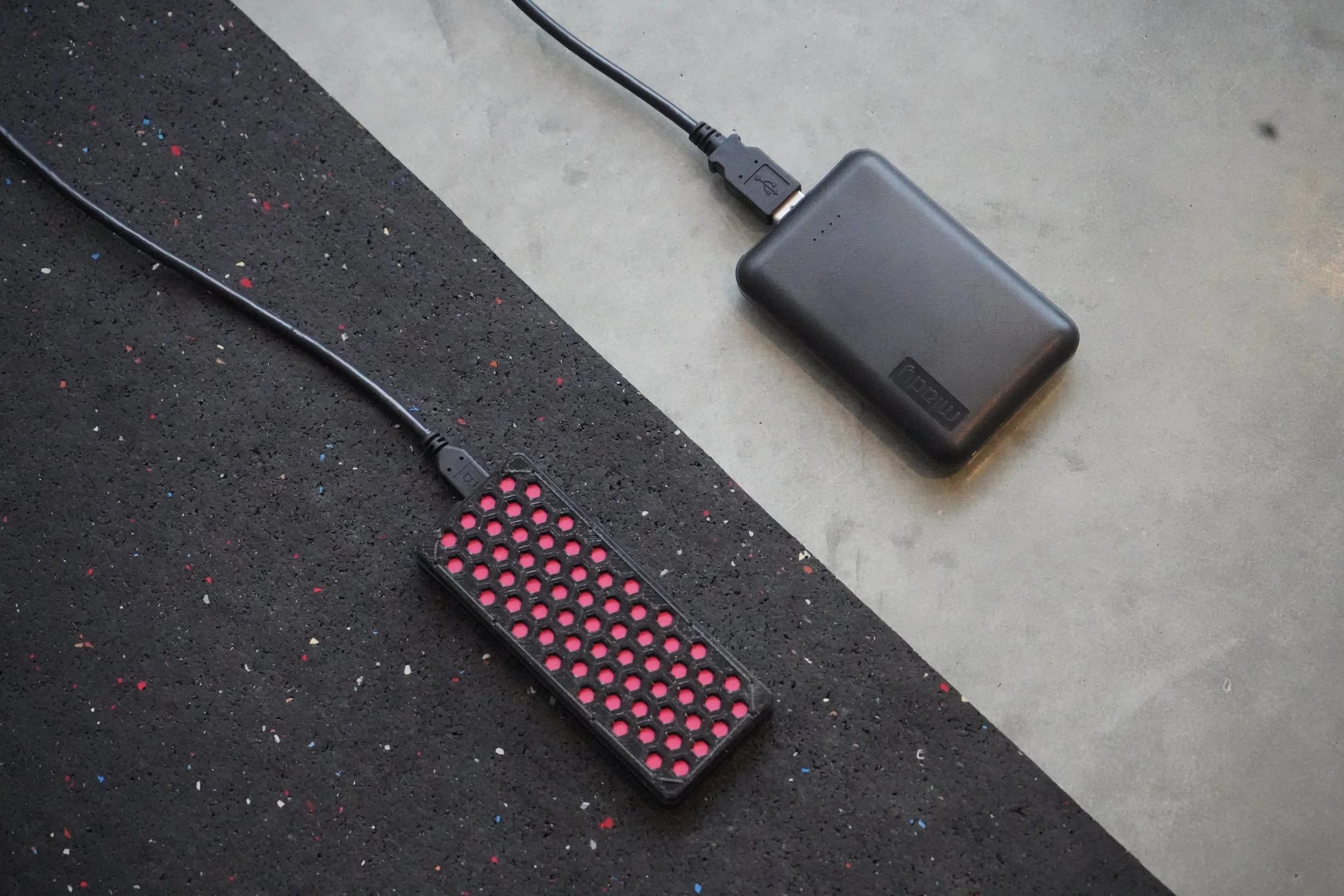
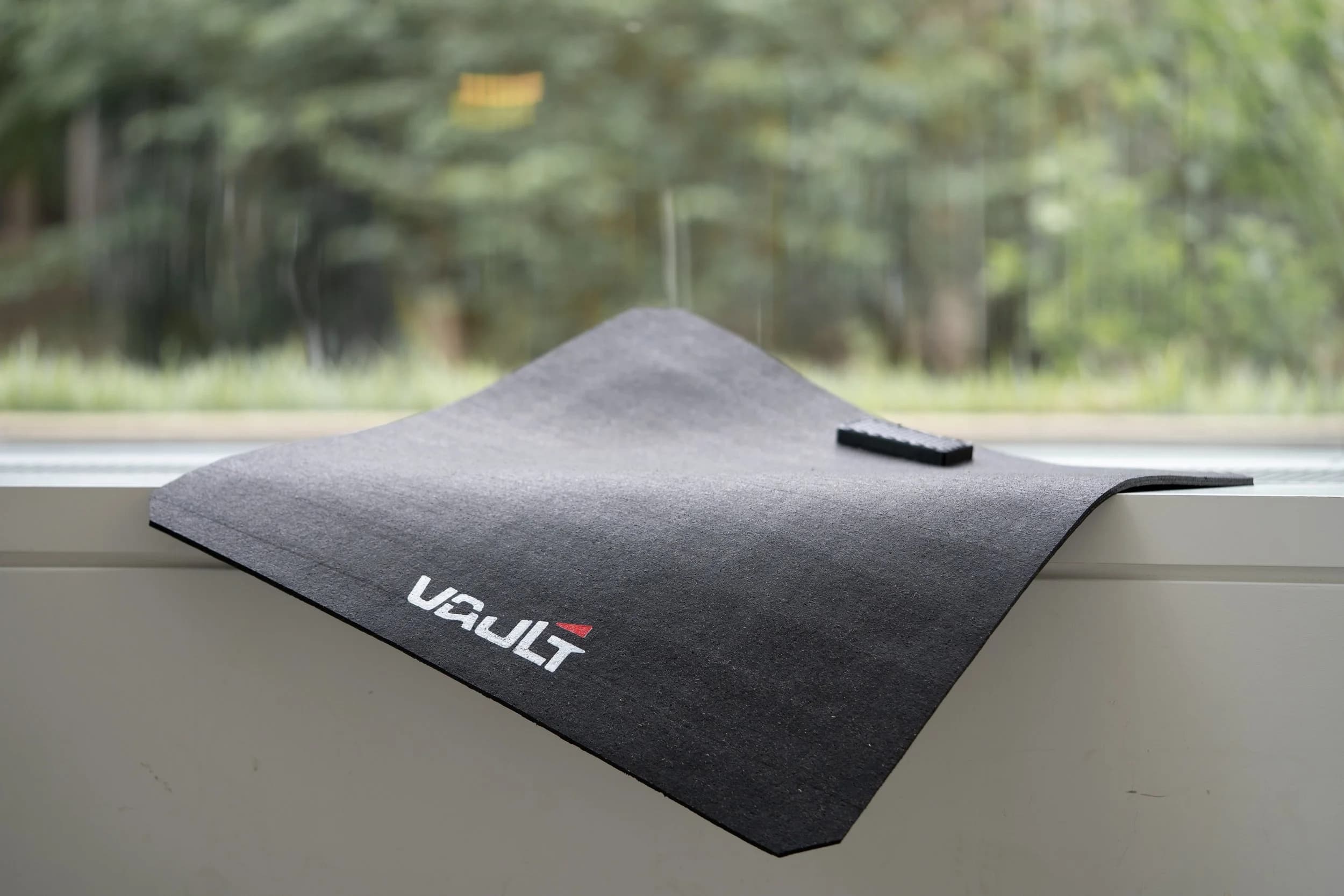
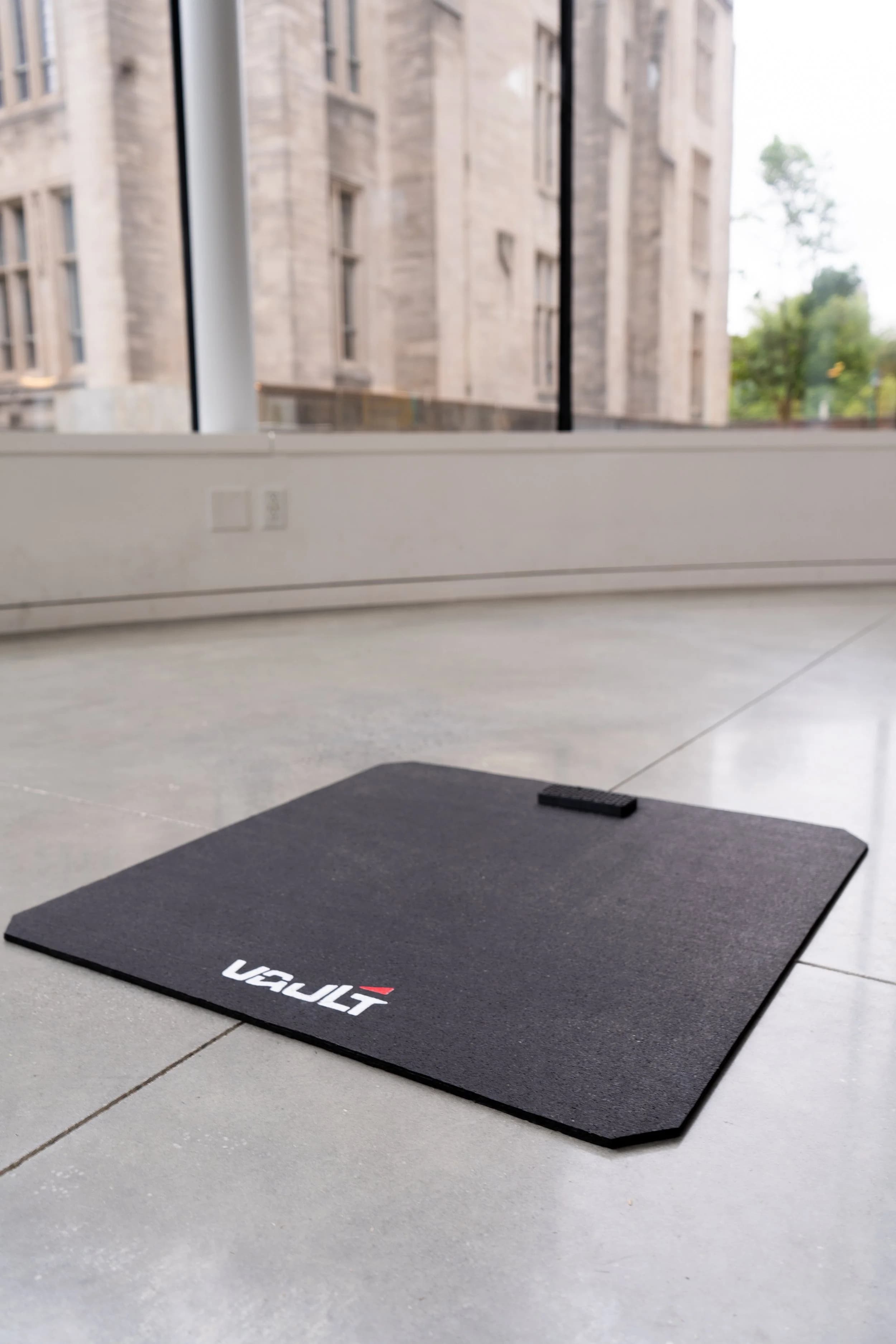
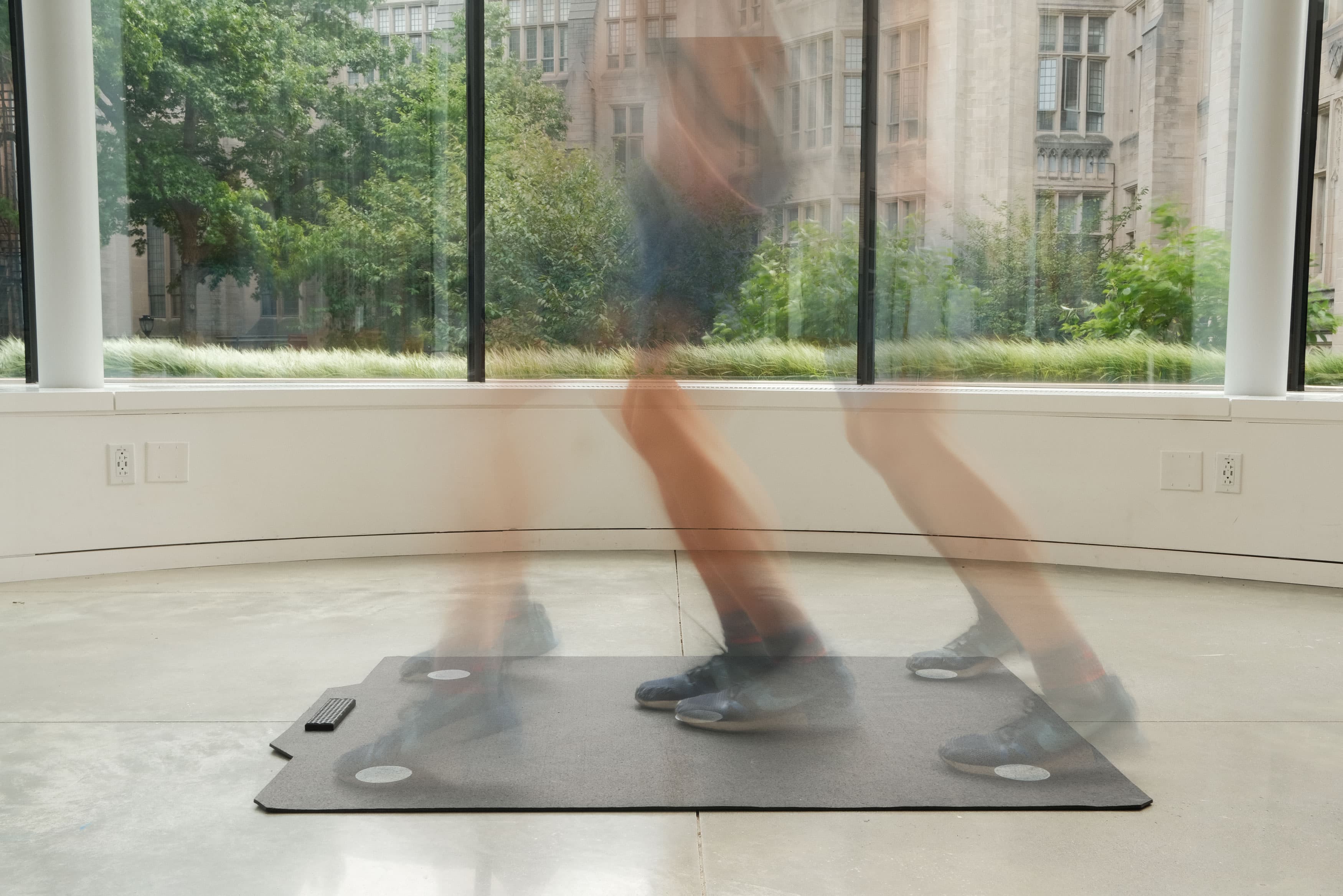
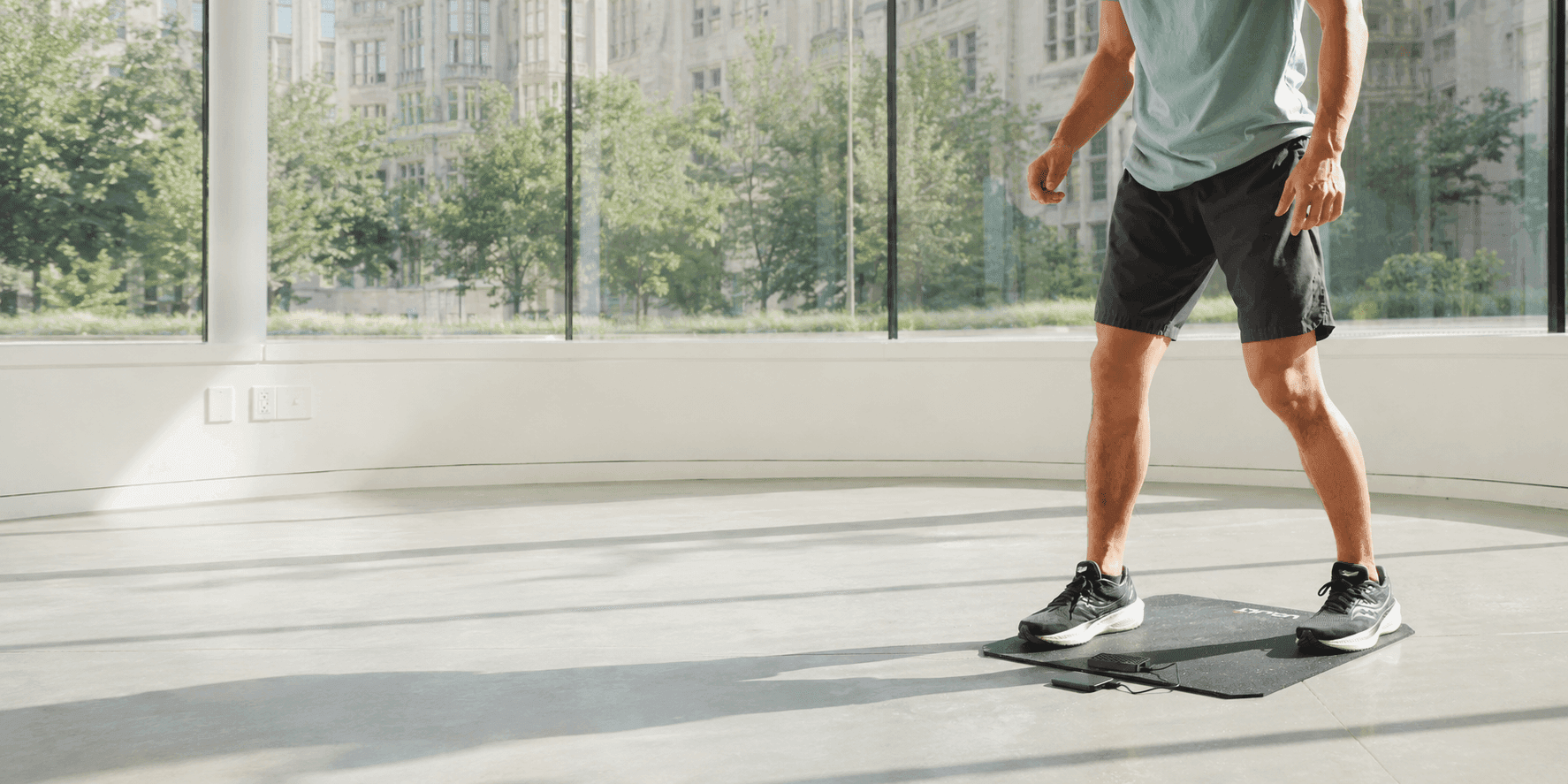
Beginning with the world’s lightest Force Plate
from












Buffalo Performance Physio, San Diego Fire-Rescue, Buffalo Bills, Mike Boyle Strength & Conditioning, DexaFit, Kansas Jayhawks, St. Joseph's, The University of Akron, S7 Strength & Conditioning, Wu Tsai Human Performance Alliance, Centre Athletic Performance, Perform Better
Design Your Experiment
Everything your oldForce Plate Missed
live now: vertical, balance, sprint,weightlifting, plyometric, agility
Vault AI
Stop being your owndata analyst,sports scientist,and biomechanist.Let Vault AI24/7
- Run tests
- Save data
- Create reports
- Interpret results
- Build profiles
- Assess injury risk
Coach: Paul had an ACL injury, what should we test?
V One: Queued four for Paul, in this order: CMJ for the left–right split, Single-Leg L and Single-Leg R balance holds for control on the injured side, then Mid-Thigh Pull for strength symmetry. Symmetry first, so a side-to-side gap shows up before anything reactive.
Coach: How did that jump look?
V One: 8.4 cm off a 900 ms contraction — a slow one. 483 ms of that was the unweighting dip and only 93 ms was braking, so the countermovement drifted down rather than dropped. The push itself took 324 ms. RSI-mod 0.09: the time cost is in the dip, not the drive.
Coach: Is that a real change from his baseline?
V One: Inside the noise. Measured against Paul’s own repeat tests, not a published band, that is not a real change in either direction.
Coach: Can you run an isometric force test?
V One: Mid-Thigh Pull is up on the plate. Set-up: Pin the bar at mid-thigh: knees around 130°, hips around 145°, shoulders just behind the bar. Stand quiet for two seconds so the plate takes body weight. On go, pull as hard and as fast as you can for five seconds. Feet flat, no jerk into the bar. Rest two minutes and repeat for three pulls. The force plot replays two seconds either side of each pull.
Coach: Can you make a custom report for him?
V One: Composing a one-page report for Paul: today’s CMJ with the left–right split, the single-leg holds, and change against his own baseline — the pull slots in once it’s recorded. I name each measurement and the app resolves every number from his record at print time, so the page can’t say anything the plate didn’t. It’s on screen now: drop any panel you don’t want, then print or share.
Tools
Accesscutting-edge tools
We constantly turn novel human performance research into practical tools for clinicians, coaches, and trainers everywhere — and every platform already in the field gets them with the next update. Two of the newest, recorded straight from the app.
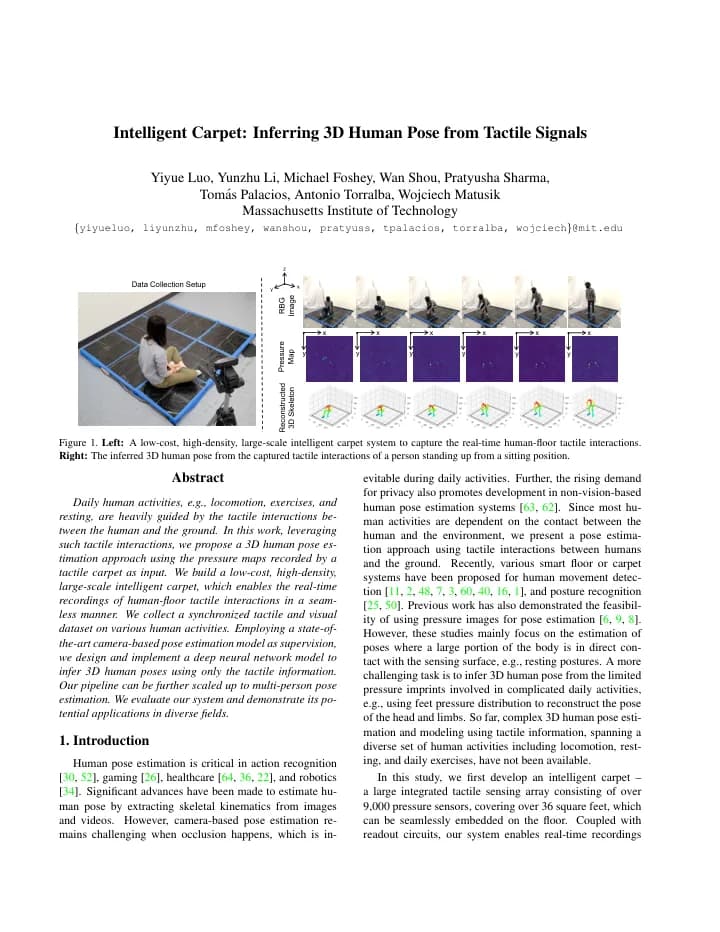
3D PostureBetaYour whole body, rebuilt in 3D from your footprints alone. Building on MIT’s Intelligent Carpet research, we trained a machine learning model that reads only the pressure under your feet and reconstructs the body standing on it — live, as you move, with no camera anywhere. Velocity-based trainingA velocity lab from the camera you already own. We trained a computer-vision model that locks onto your joints through the phone or tablet camera and reads joint angles, depth to target, peak velocity, and reps in real time — no sensors on the bar, no wearables, and every rep lands in the same session as the plate data.
- Vert Metrics
- Force Plot
- Pressure Target
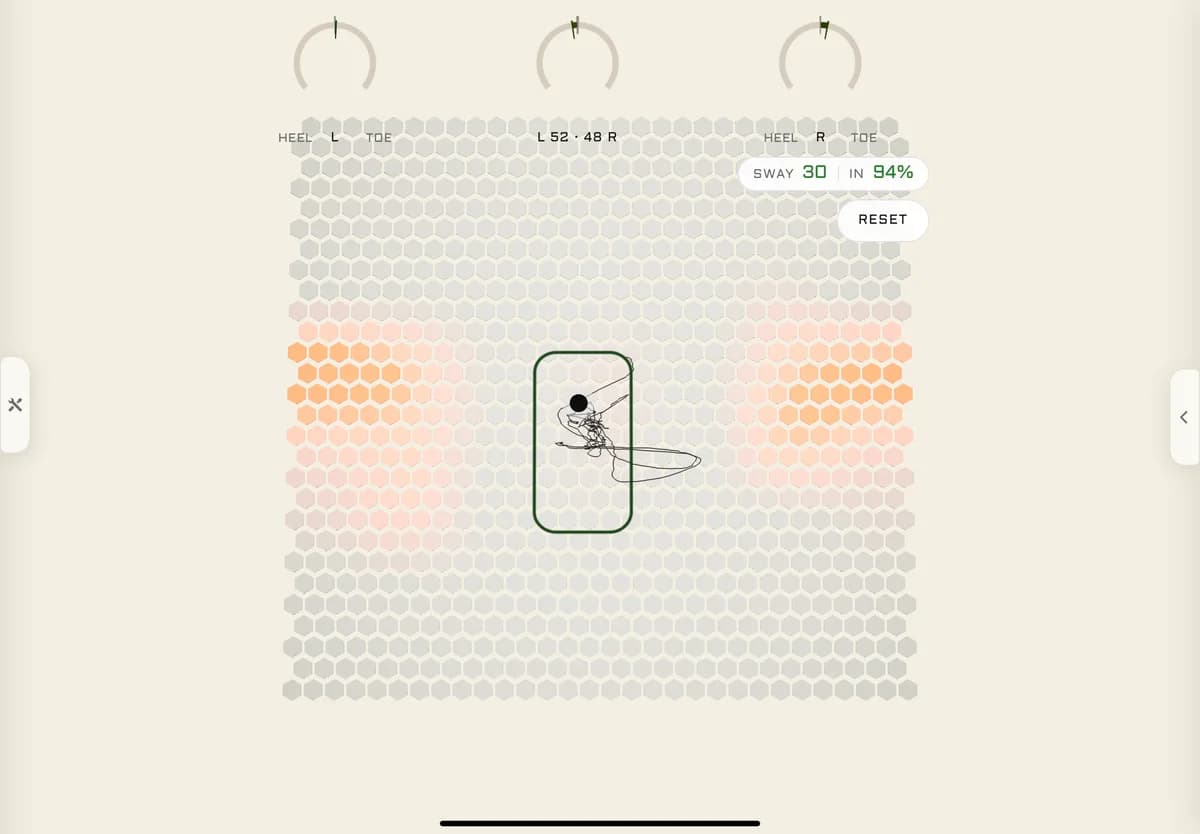
- Center of Pressure
- Balance Styles
- Stand Timer
- Takeoff + Landing
- Lift
- Camera
Research
Join the researchfrontier forhuman performance
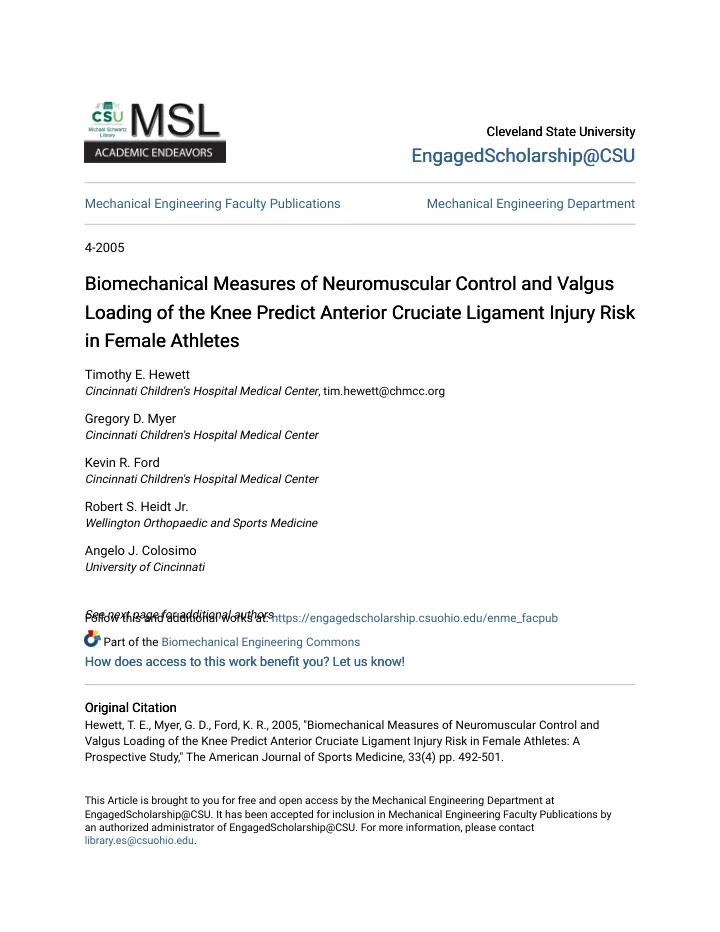
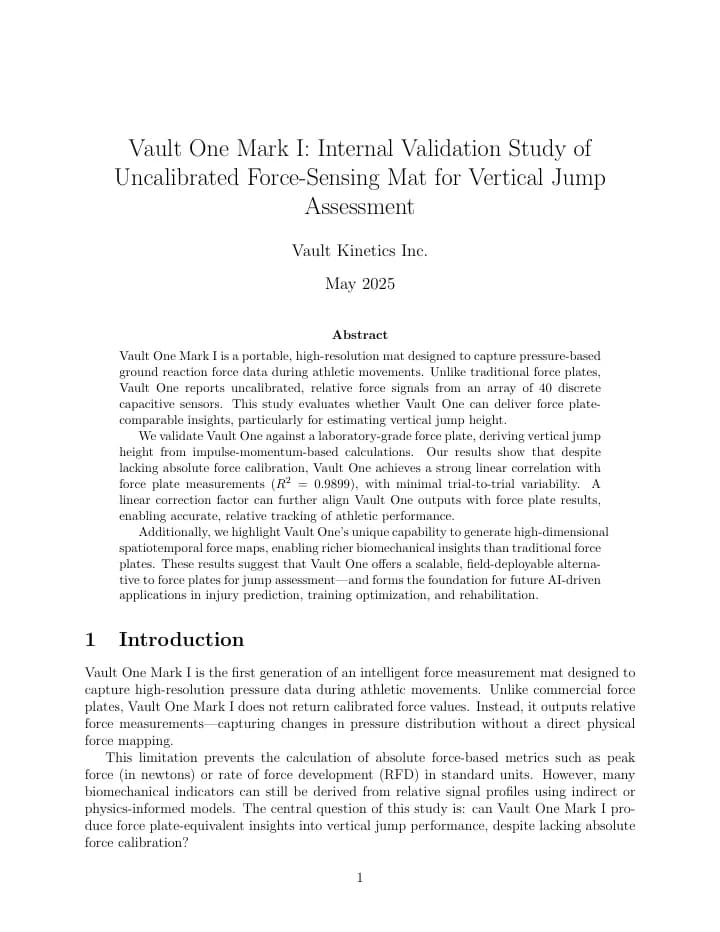
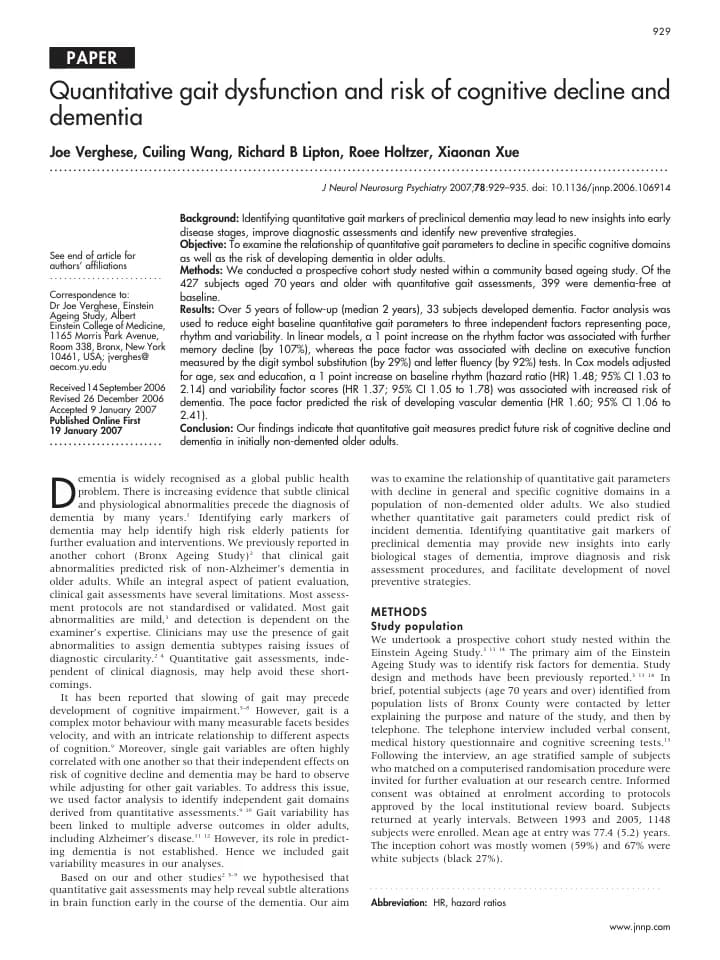
Vault is a working research lab, running validation and field studies with universities, clinics, and teams to make humans as healthy as possible. We build on the work of the people who quantified movement before us. Here are a few of the papers that shaped our belief in the predictive power of ground reaction force data, including our own internal validation study.
With support from



Praxis, U.S. National Science Foundation, NVIDIA Inception Program, Yale School of Engineering & Applied Science, Tsai Center for Innovative Thinking at Yale, VentureWell
Exercise library
See Vaultin Action
Drag to look around and pick a clip to play it: the tablet shows what the app recorded.
Our mission
The future of health is prevention, not treatment.
Every movement carries a signal about what’s coming: strength building, an imbalance creeping in, an injury still weeks out. Our mission is to put that signal in the hands of the people closest to it — gyms, clinicians, and trainers — so they can turn movement into health, and see injury and illness coming before they arrive. From groundbreaking hardware to AI trained to predict injury, Vault Kinetics is pushing the frontier of human performance and longevity.